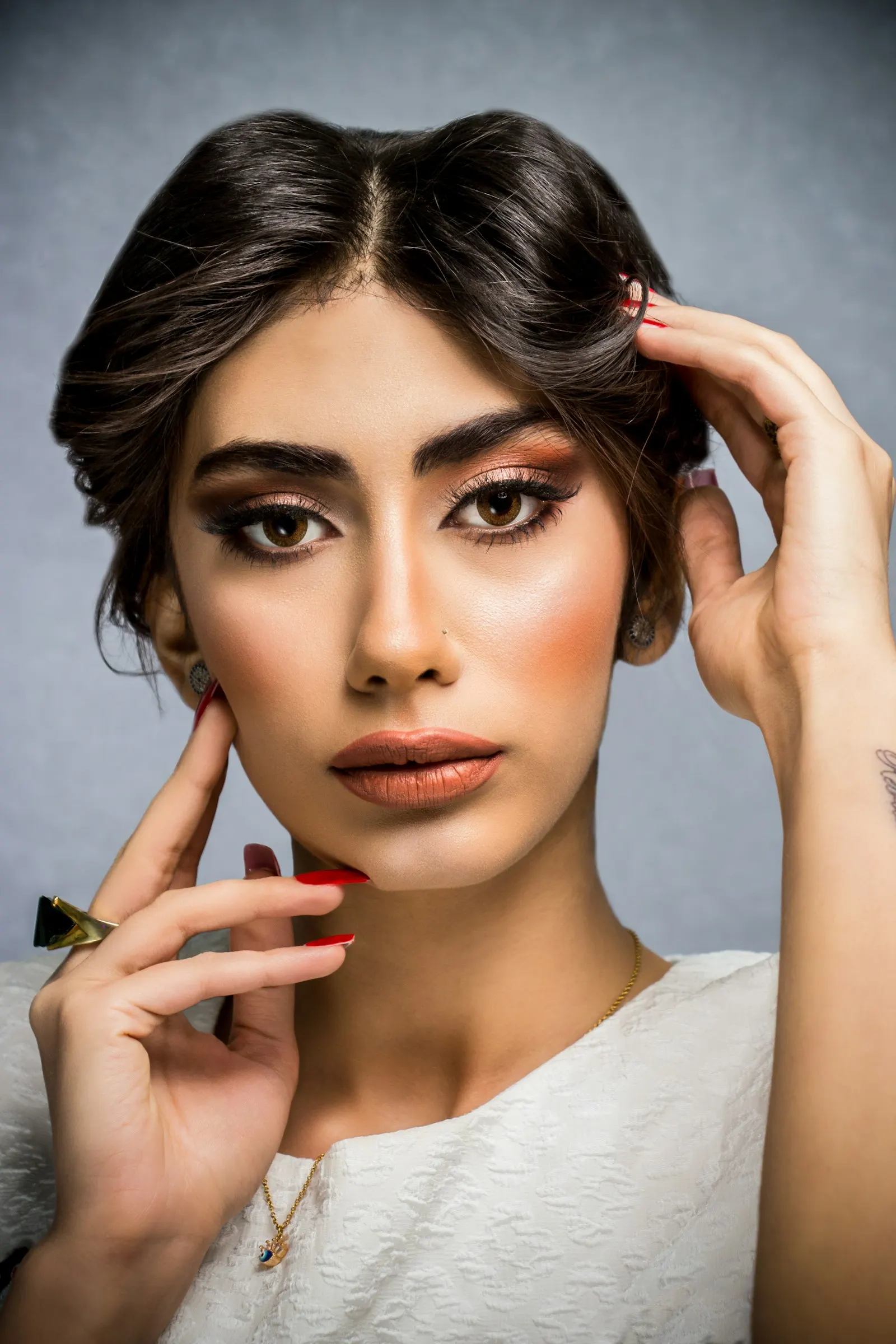
This one is for filmmakers, MUAs and brand producers. If you have ever sat behind the monitor on a beauty shoot and heard "the skin looks a bit oily here, can we tone it down?" followed, in the next scene, by "can we add a little more glow to the cheeks?", you know why we wrote this. Every DOP and colourist in the room takes a breath, because glow and oil are not opposites. They live a millimetre apart on the same slider, and getting one without the other is the whole game.
This is a note about that millimetre.
What glow actually is
Glow, on camera, is a specific optical effect. It happens when the skin has a light layer of moisture or product sitting on top of it, catching a soft key light, and reflecting a clean, diffuse highlight back to the lens. The highlight is broad. It sits on the high planes of the face: brow, cheek, bridge of nose, cupid's bow. It fades out at the edges. It feels warm. It reads as health.
Glow is a highlight with a soft edge and a specific location.

What oil actually is
Oil, on camera, is glow that has spread too far, or moved to the wrong place, or gotten too shiny at the edges. It's what glow becomes if:
- The moisture sits in the T-zone (forehead, nose bridge) rather than the high cheeks.
- The highlight has a hard edge, meaning the source is too small or too hard for the surface.
- The reflection is stronger than the surrounding skin tone by more than about 1.5 stops.
- The pores are clogged enough that the surface texture disappears under the sheen.
Oil is a highlight without an edge, in the wrong place, at the wrong intensity.
Where the choice lives
The choice between glow and oil is made in three departments, in this order.
Makeup
The MUA prepares the skin. A hydrating primer under a light foundation, then a strategic highlighter on the high planes only, then a targeted matte powder on the T-zone. Glow prep is not "add shine". It's "add shine here, absorb it there". If the MUA doesn't matte the nose bridge and forehead, no lighting decision will save the frame.
Lighting
The DOP controls how the shine reads. A large soft source will render the highlight as a broad, diffuse glow. A small hard source will render the same makeup as a sharp spot that reads as oil. The same face, same makeup, will look glowy or oily depending on the size of the source at the subject.
Grade
The colourist can tame a highlight that's rolling into oil territory by rolling off the highlights and lowering saturation in the specific tone range where shine sits. But this is a fix. If glow becomes oil in the grade, you've already lost the frame. It's much easier to prevent than to repair.
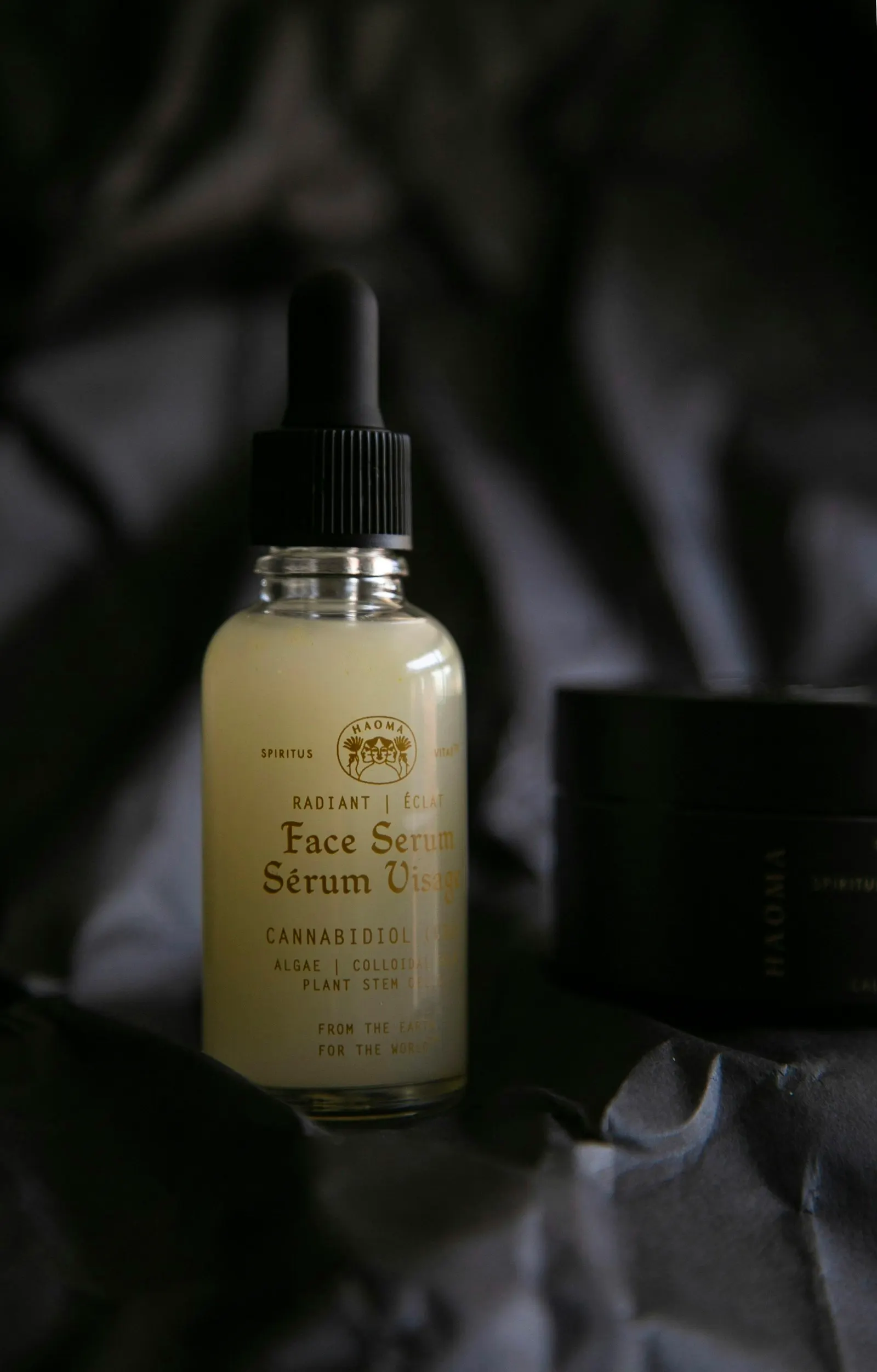
The MUA on set is the whole department
On our beauty shoots, the MUA sits behind the monitor between every take. Not in the vanity van. Behind the monitor, looking at the frame the audience will see. Because the T-zone that looks matte in the vanity van under overhead LED will absolutely shine under a 4x4 soft box.
Every take, the MUA watches for three specific things:
- Sheen migration from the cheeks to the nose bridge.
- New sweat on the brow (Mumbai, 3pm, no AC in the vanity van).
- Foundation breaking up around the mouth.
Between takes, they blot with rice paper, matte with a small brush, and refresh the highlighter on the high planes. This is the invisible work that makes the difference.
The Indian humidity variable
Nobody outside India talks about this enough. Between June and September, the humidity in Mumbai destroys makeup. Foundation breaks down in 20 minutes. Sweat migrates into eyebrows. Powder cakes. If your beauty shoot is in monsoon and the location doesn't have proper AC, the MUA is fighting a losing battle and the film will read as oily by 4pm no matter what.
Our current default: for June to September, beauty shoots happen in controlled AC locations only, or before 10am if outdoor. We've learned this the hard way.
Oil is not a mistake, it's what glow becomes when the light is wrong, the makeup is wrong, or the day is too long. Prevention lives on set, not in the grade.
What the client should watch for at the monitor
If you're at the monitor on a beauty shoot and you want to spot the difference between glow and oil in real time:
- Look at the highlight on the cheekbone. If it's broad and fades gently, it's glow. If it's sharp and small, it's oil.
- Look at the nose bridge. If it has a highlight at all, it should be a small dot. If it's a line, it's oil.
- Look at the forehead in profile. If the light bounces off the temple, you have a problem.
- Look at the corner of the mouth. If the makeup is breaking up into small lines, the MUA needs to touch up before the next take.
The counterintuitive one
Glow reads better on skin that has a slight texture than on skin that has been powdered flat. The audience's eye reads pore texture as "real skin", and the reflection off real skin has small variations that catch the light in a way that feels alive. Skin that's been fully mattified reflects nothing and looks like paper. Skin that's been fully glossed reflects everything and looks like plastic. The sweet spot is textured skin with a light layer of hydration and a targeted highlighter. Alive, not shiny, which is the whole argument of how we make skin look good without making it look fake.
Post is a last resort
When a shot has slipped into oil territory and there's no retake budget, the colourist can help. The moves:
- Roll off the top of the highlight curve so the specular reflection doesn't clip.
- Slightly desaturate the highlight range so the shine doesn't have colour.
- Add a very subtle vignette to keep the eye off the T-zone.
- In extreme cases, track a small darken through the frame on the shiny area.
These are all salvage. They don't add glow. They only take away oil. Real glow has to happen on set, for the same reason beauty retouching starts on set.
The three departments that own this decision
Glow versus oil is decided by three people, not one. If any of them is not thinking about it, the frame slips.
- Makeup. Prep, highlighter placement, targeted matting. The MUA sits behind the monitor between every take, not in the vanity van.
- Lighting. Source size at the subject decides whether the same highlighter reads as glow or as a shiny spot. Read our note on why beauty films need different lighting.
- Grade. Where highlights are rolled off, where saturation is pulled from a specific tone. Post can save a frame that slipped, but only just.
When these three departments are aligned, the film reads as expensive. When any one of them is loose, it reads as greasy. There is no in between.
Quick answers
How do you make skin look glowy on camera?
Hydrate the skin, put highlighter only on the high planes (brow, cheekbone, bridge of the nose, cupid's bow), matte the T-zone and light the face with a large soft source. Glow is a broad highlight with a soft edge in a specific place, and the size of the source at the face decides whether the same makeup reads as glow or as shine.
How do you stop skin looking oily on camera?
Control it on set. An MUA behind the monitor blots and re-mattes the T-zone between takes, the key light stays big and soft, and in monsoon the shoot moves to an air conditioned space or before 10am. The grade can roll off a shiny highlight, but it only takes oil away; it can't add glow.
What is the difference between dewy and oily skin on camera?
Dewy skin has a soft edged highlight sitting on the high planes of the face; oily skin has a hard edged shine in the wrong place, usually the forehead and nose. As a rule of thumb, a highlight more than about 1.5 stops brighter than the surrounding skin starts to read as oil.
Last note
The gap between glowy and oily is one shade of highlighter, one size of soft box, one blotting sheet, one degree of humidity. It's smaller than most clients realise. It's why our beauty jobs run with an MUA on the floor at all times, and it's why we push back when a brief asks for "dewy glowy skin" without also protecting for the humidity control that makes it possible.
Glow is a skill, not a filter. If you're planning a skincare or beauty film, factor in the specific person on set whose only job is to protect it. If you'd like a scope for a beauty day, our page on beauty and skincare film production lays out how we run one, or start a project here and ask for our current MUA roster.