There is a moment on every texture day when six adults stand perfectly still around a teaspoon of moisturiser. The gaffer (head of lighting) is holding a flag. The focus puller is holding focus on a peak of cream roughly the height of a grain of rice. The client is holding a chai they forgot about twenty minutes ago. Then the peak slumps, very slightly, and someone says "fresh one, please" in the voice of a person who has said it forty times since lunch.
Skincare texture shots are the smallest frames in a beauty film and very often the slowest. This note covers what they are, the main types (swirls, smears, drops, swatches and a few stranger ones), how each is usually lit and shot, and what a brand should send before the day. Beauty is our largest category at Yellow Cloud Studio, so texture work is a regular fixture on our Mumbai floor, and most of what follows was learnt one slumped peak at a time.
What a texture shot is, and why brands obsess over it
A texture shot is the product out of its pack, filmed or photographed close enough that you can read its body: a swirl of cream, a swipe across glass, a drop of serum, a swatch on skin. In a film it might last two seconds. On a product page it does the job a tester does in a shop.
Brands obsess over it for a simple reason. A screen cannot let anyone touch the product, so this frame has to do the touching for them. Is the cream rich or whipped? Does the serum run or cling? Does the gloss stay wet or dry down? The pack shot cannot answer any of that. The face shot can only hint.
It is also why texture shot photography is hard. As we wrote in why skincare is so hard to film, the product changes state in frame: a solid in the pack, a semi solid on the finger, a liquid film on skin. A texture shot freezes one of those states and makes it look like it was always meant to be that way. The product rarely agrees.
The rules every texture shot shares
Each type below has its own quirks, but four rules hold whether the job is a still or a macro product video.
- Fresh product, often. Under lights, creams skin over and lose their gloss within minutes, serums bead and creep, foams collapse. The frame you get at minute one is not the frame you get at minute six. So we shoot a few takes, wipe, and lay down new product.
- Surgical cleanliness. At macro distances a single fibre of lint looks like a rope and a fingerprint on the glass looks like a crime scene. Gloves, a blower, lint free cloths and glass cleaner live on the table.
- Tools, not fingers. Spatulas, palette knives and syringes lay product down the same way every take. Fingers come in only when the finger is the shot.
- Focus measured in millimetres. We shoot texture on 90mm and 100mm macro glass, and at those distances, as the macro photography entry on Wikipedia notes, something a millimetre off the focal plane can already be visibly soft. Focus is set by hand, the product goes exactly where it was rehearsed, and for stills several frames at different focus points can be blended (focus stacking).
Cream swirls and peaks
The swirl is the hero of moisturiser advertising: a soft spiral with a little peak on top, as if the product had been piped rather than scooped. What makes it hard is that cream is not icing. Light creams will not hold a peak at all, thick balms crack instead of curling, and even a good peak relaxes slowly under the warmth of the lights.
It is usually built on a clean base with a palette knife, often on a small turntable so the spiral comes from the spin rather than the wrist. The light comes from above and a little to one side, low enough to rake across the surface, because the shadow each ridge throws is what tells the eye the cream has height. Black flags either side stop it going flat. White cream on a white base is the classic trap: expose for the cream, not the base, or every ridge melts into one bright blob.
Expect many attempts. The one that makes the edit is a swirl that looks effortless, which is a different thing from a swirl that was.
Smears and swipes: the cream swatch shot
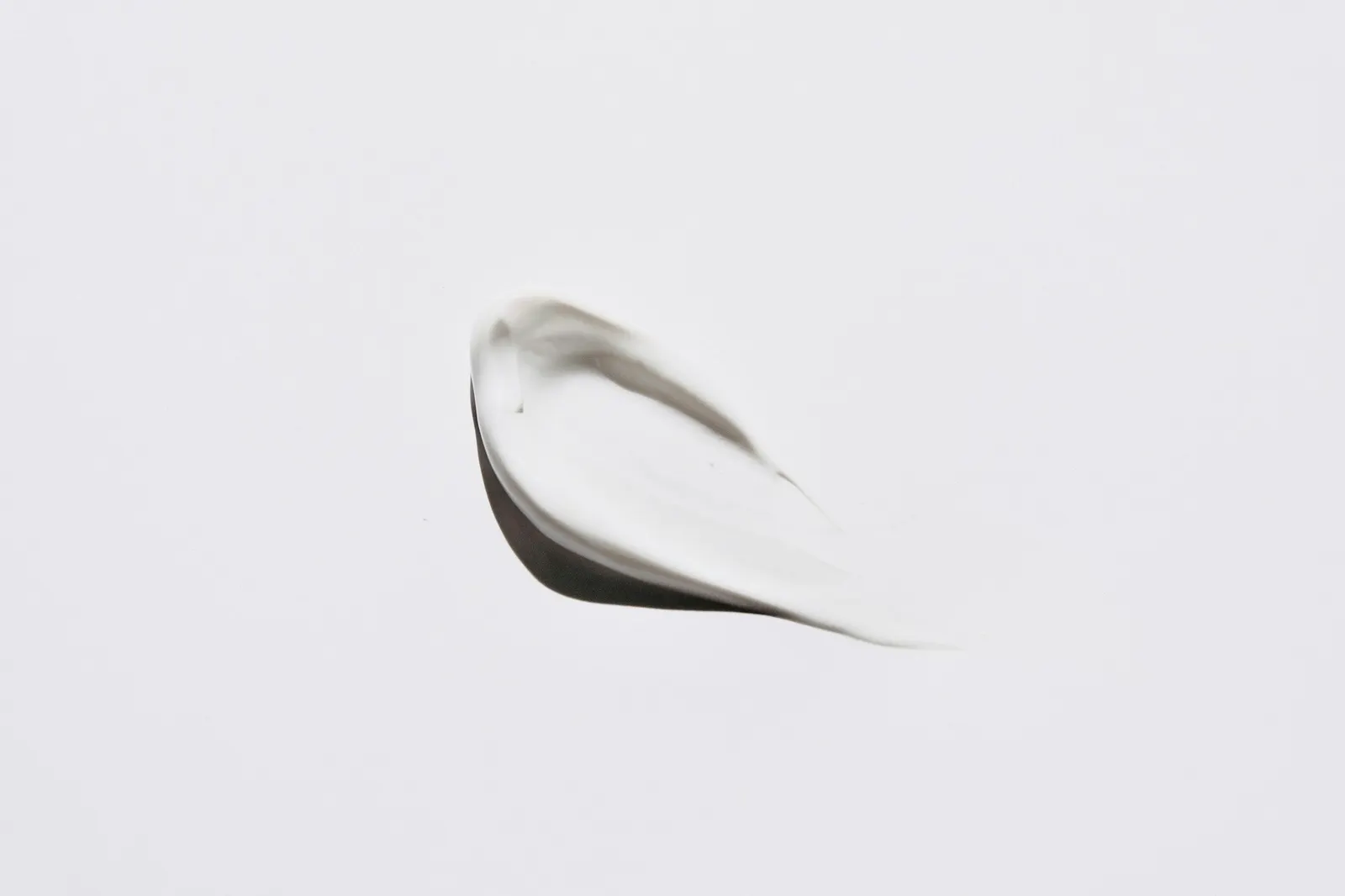
The smear is the workhorse cream swatch shot: one confident swipe, thick at the start and feathering to a thin film at the tail. The whole shot lives in that tail, because the thin end is where the texture reads. It is also where hesitation shows. Pause halfway and you get a stutter mark, and a stutter mark reads as a product that drags.
Clean glass and acrylic sheets are the usual bases because they wipe down between takes and read as neutral (acrylic scratches, so keep spares). Low raking light shows the ridges, and a larger soft source keeps the overall shape calm. Glossy creams and the glass under them both throw glare, and a polariser on the lens is the standard fix. Canon's guide to polarising filters explains why: reflections off non-metallic surfaces like glass can be cut at the lens in a way software cannot reproduce afterwards. We still leave a little shine in. A smear with no specular highlight at all reads as paste.
Serum drops, pours and gel wobble
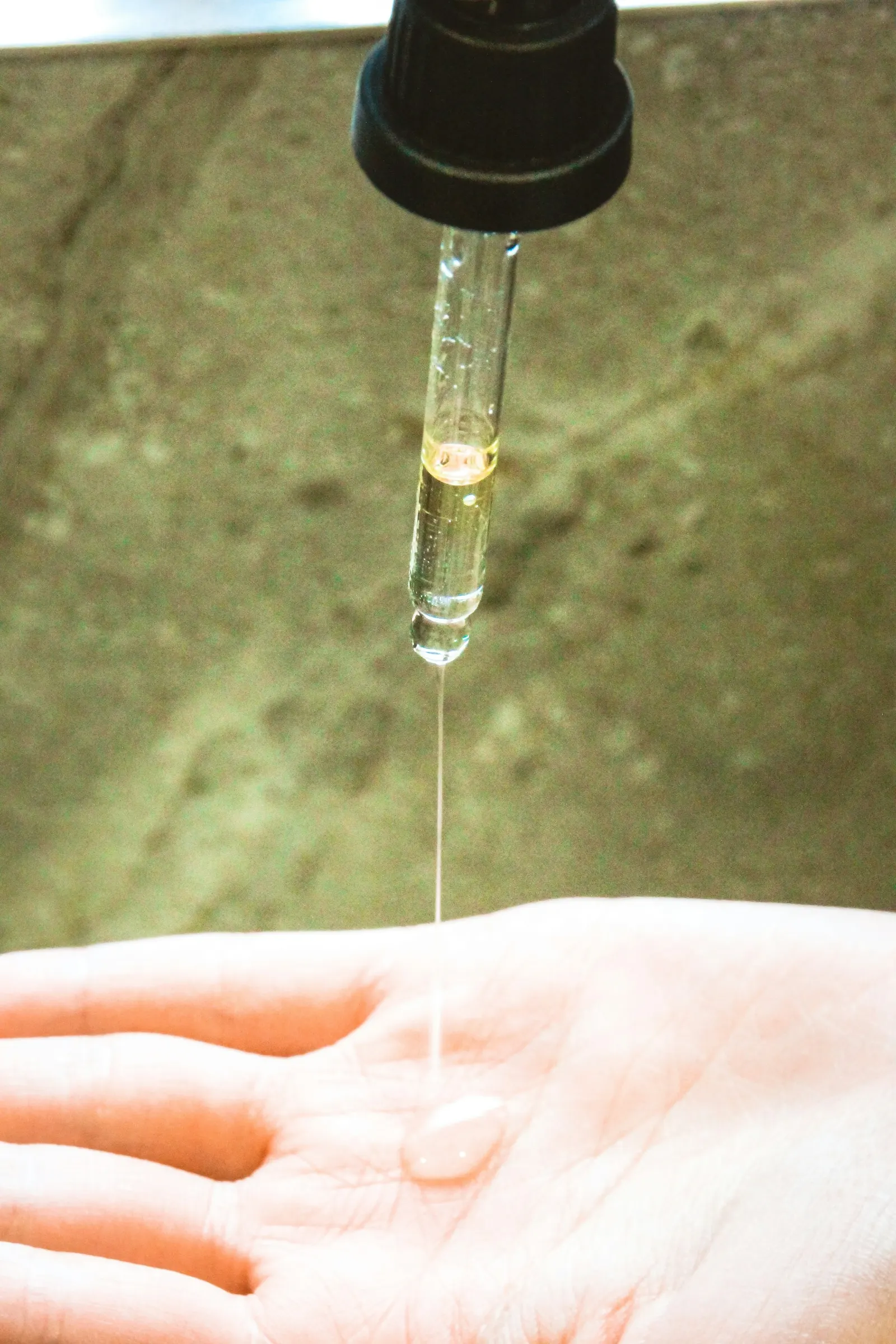
Serums and gels are translucent, which changes the lighting logic completely. Light a serum from the front and it looks like water, or worse, like nothing. Light it from behind and the colour, the clarity and every tiny bubble come alive. Milky gels and emulsions behave differently again: light enters them, scatters and comes back out, the same subsurface scattering that makes skin look alive on camera. It is why a well lit milky gel looks soft and a badly lit one looks like correction fluid.
A drop or a pour is over in a fraction of a second, so a serum texture shot in a skincare texture video is usually a high frame rate job. The drop gathers at the pipette, stretches into a string, lets go, lands and spreads, and slow motion is the only way the audience sees all five beats. High frame rates eat light, so the set gets brighter and warmer, and the product feels it. Our skincare sets already run air conditioned at 20 to 22 degrees for the model's sake. The gels are grateful too, because they go runny faster than anyone expects.
Gel wobble, the jelly moisturiser trembling after a tap on the surface, is a timing shot. The tap has to be identical every take and the gel has to be fresh, because a gel that has sat under the lights for ten minutes wobbles like it is tired.
Powder crush, foams and ingredient macros
Powder crush. A pressed powder or blush broken with a spatula, or dropped so it shatters. Easily the most satisfying two seconds on a beauty set, and the most destructive, because every take ruins a pan. Oblique side light brings out the grain and the shimmer; the little plume of dust needs backlight to show at all. Then the whole table needs cleaning, because powder gets everywhere, including into next week.
Bubbles and foams. Cleansers and face washes want a rich lather, and lather is on a timer. Foam starts collapsing almost at once, faster under hot light, so it is built just before the camera rolls, shot, and built again. A rim or back light makes the bubbles read as separate spheres rather than a grey sponge.
Ingredient macros. The vitamin C drop, the aloe sliver, the oat flake beside the cream. Lovely, and slightly dangerous. The frame should show the ingredient honestly next to the real product, not imply the formula does something the claims sheet does not say. These frames are also where restraint pays most. Making a product look expensive is mostly a matter of taking things out, and one oat flake beside a clean swirl reads richer than a whole breakfast bowl.
Lip and foundation swatches: on skin or on a surface?
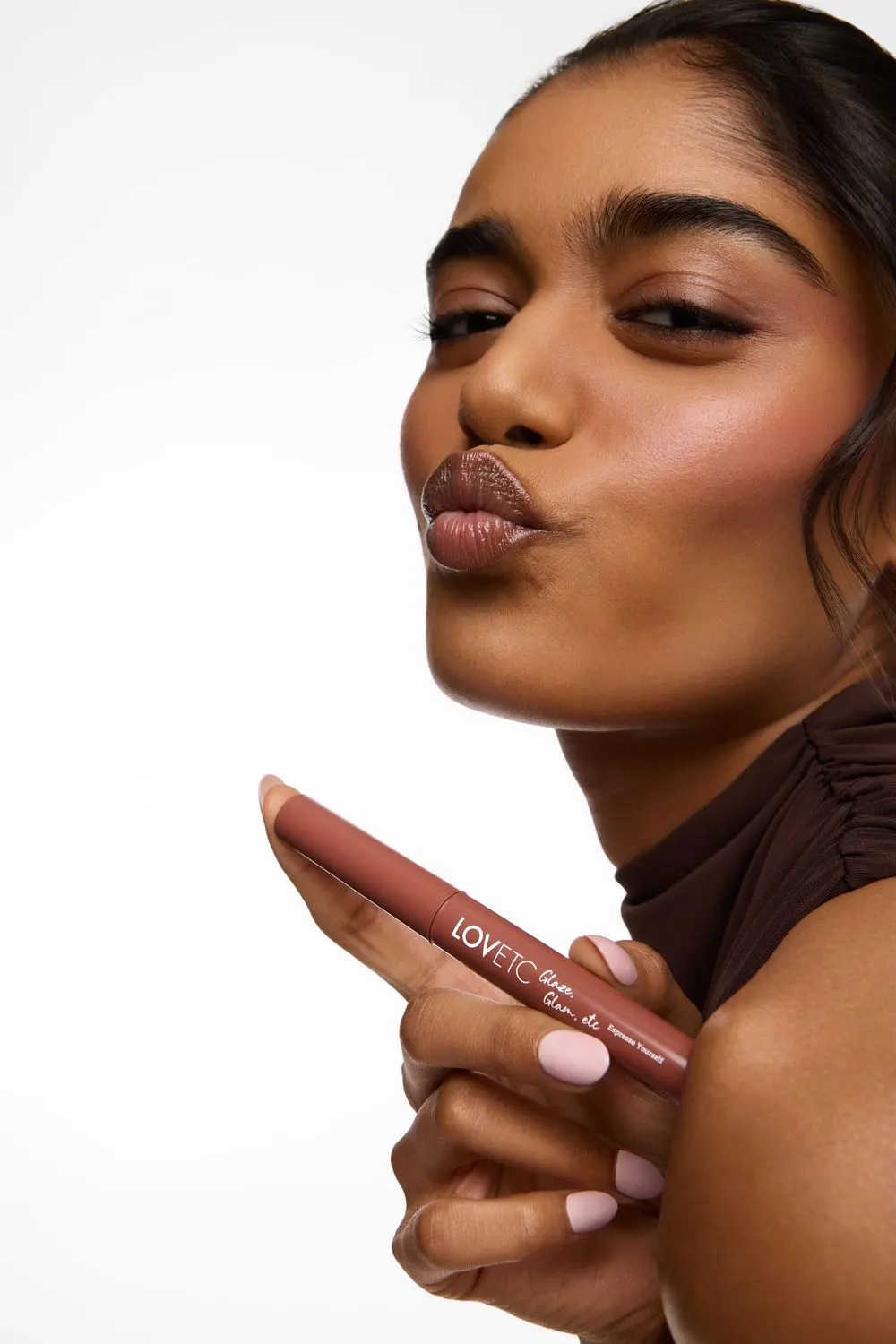
Swatch photography splits into two camps. A swatch on a surface (card, acrylic, glass) is clean, repeatable and easy to colour match across shades. A swatch on skin shows what the customer actually wants to know: what the shade does on a real lip or a real arm. Most brands need both, and a lipstick swatch set on skin is only honest if it covers a range of skin tones.
Colour is the hard part. Every shade gets the same light, the same white balance and a colour reference at the start of each setup, so that four shades in a grid are four shades and not four moods. Retouching follows our usual rule: skin is cleaned, never replaced, and a shade is never nudged into a colour the product is not. With the MUA (makeup artist) on the floor all day, lips are blotted, reapplied and checked between takes, because a lip swatch dries and feathers faster than a cheek. Gloss adds one more layer: the highlight on a lip lives in the same millimetre between glow and grease we keep writing about.
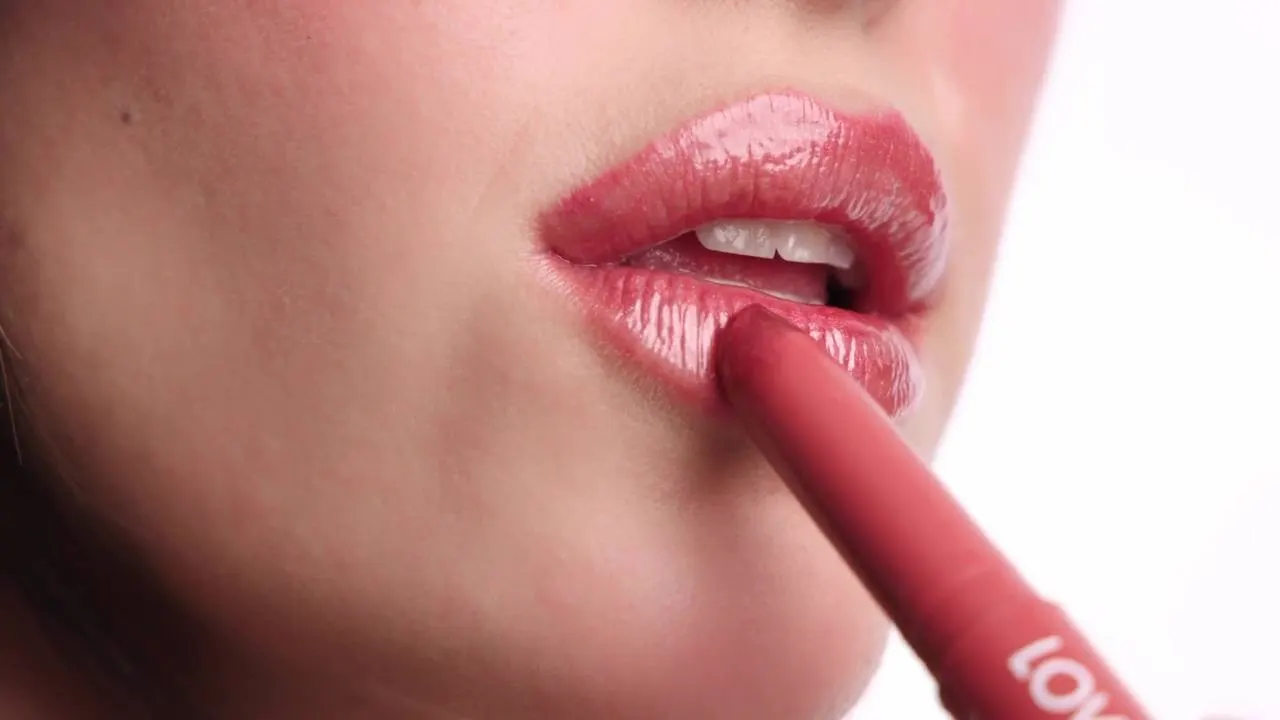
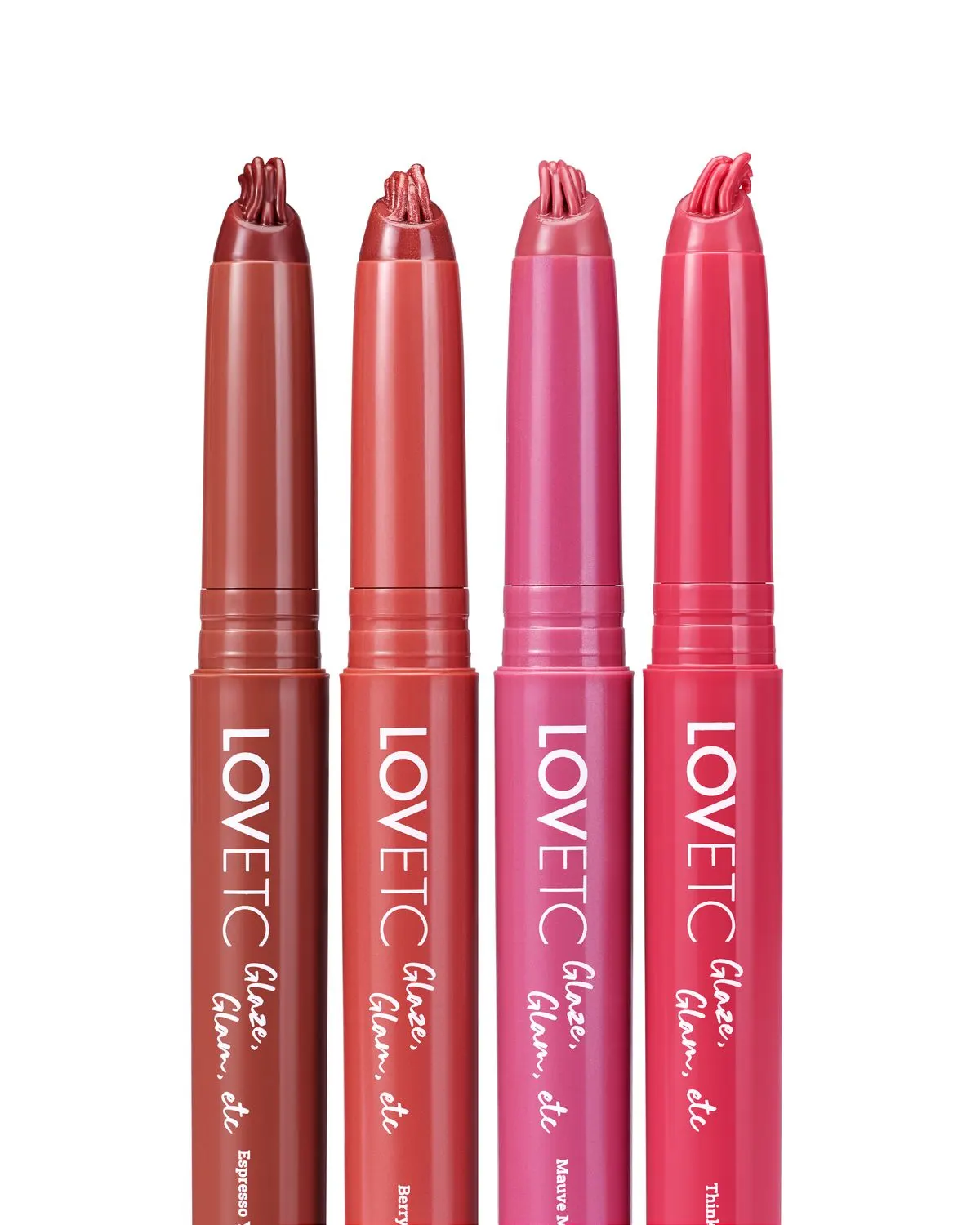
On the LOVETC lip conditioner campaign we stayed close: a macro film of the bullet, lip close ups at a distance where you can read the finish rather than guess at it, application straight from the bullet, and a four shade lineup shot product only. Foundation has its own twist. Some formulas shift a little in tone as they set on skin, so the swatch is shot fresh and the time noted, or the same shade quietly drifts across the day.
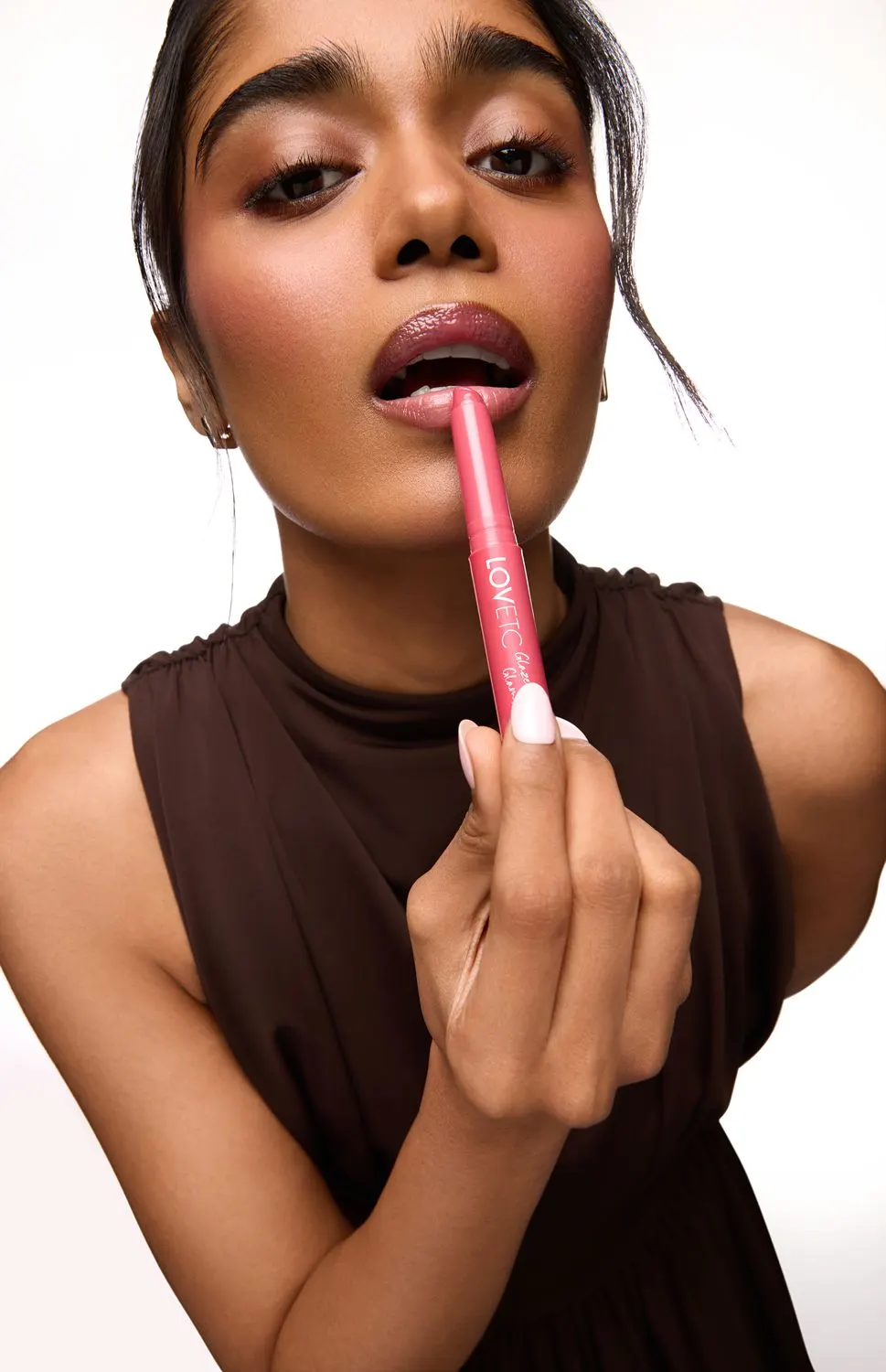
The pack tells you what it's called. The face tells you what it does. The texture shot is the only frame that tells you how it feels.
What to send the studio before a texture day
Texture days go smoothly when the product arrives early and in quantity. This is the list we send once a texture beat is on the shot list.
- Extra product, from a fresh batch. Texture work burns through units, because every smear, crush and swatch is a fresh application. Send several units per SKU on top of the usual three pack samples five days early (one for the makeup test, one for the lighting and macro test, one sealed as the hero), and more of anything you want crushed. Old stock from a warm godown may have separated or thickened.
- The real formula, not a stand in. A substitute cream swirls differently, and a texture shot is a promise about how your product behaves. If the formula has changed since the samples, tell us.
- Shade names and a colour reference. Which shade is which, which is the hero, and your brand palette or Pantone reference, so the lineup matches the pack and the listing.
- Reference frames. Two or three texture shots you love, and one you hate. The one you hate is often more useful.
- Handling and claims notes. Anything that needs refrigeration or hates light, and any claim (lightweight, non sticky, fast absorbing) the texture beat has to prove.
- Stills, film or both. Say so at the brief stage. Stills on a film day are the cheapest good stills a brand can buy, and texture and swatch photography can run on a second setup beside the film.
For our part, glossy creams and glass or pearlescent packs get lighting tests before the day, and skincare always gets a prelight (the set is lit the day before, so the shoot day starts with the camera, not the ladders).
Quick answers
What is a texture shot in skincare?
A texture shot is a close up, usually macro, photo or film clip of a product outside its pack (a cream swirl, a smear, a serum drop or a swatch) that shows its consistency, finish and colour. It is the frame that tells a customer how the product feels before they can touch it.
How do you film a cream swirl?
On a clean glass or acrylic base, usually with a palette knife and a small turntable, lit from above and to one side so each ridge throws a shadow. Fresh cream goes down every few takes, because a swirl slumps and skins over under the lights.
What lens is used for texture shots?
A true macro lens, one that focuses close enough to show the product at or near life size. We use 90mm and 100mm macro glass for creams, serums, drops, powders and lip swatches. Depth of field at that distance is a few millimetres, so focus is set by hand.
How long does a texture day take?
Longer than the shot list suggests. Every texture frame needs cleaning, fresh product and a focus check between takes, and a small extra shot on a lit set takes about 20 minutes, not five. For hero and campaign stills we plan three to five SKUs in a full day; if every SKU also needs swirls and swatches, plan for the lower number.
Can texture shots be done in CGI or AI?
Some can. CGI and AI earn their place when the pack does not exist yet or the physics is impossible, but they still struggle to show how a real cream or serum behaves. If the texture frame is a promise about your formula, we shoot it for real. More in our note on what AI video can and can't do for brands.
Last note
A texture shot looks like the simplest frame on the shot list: some cream, a knife, a nice light. It is really a small experiment, repeated until the product behaves. Give it proper time on the schedule, send more product than feels sensible, and resist the second oat flake.
Texture beats sit at the heart of our beauty and skincare film work, and they get the same care whether they end up as two seconds of a launch film or a full stills set. Send us the product and the brief, and we'll plan the texture day with you.